
EPA 2027 and the Pre-Compliance Buying Window: Why Northeast Fleets Are Stocking Up on Pre-2027 Iron Now
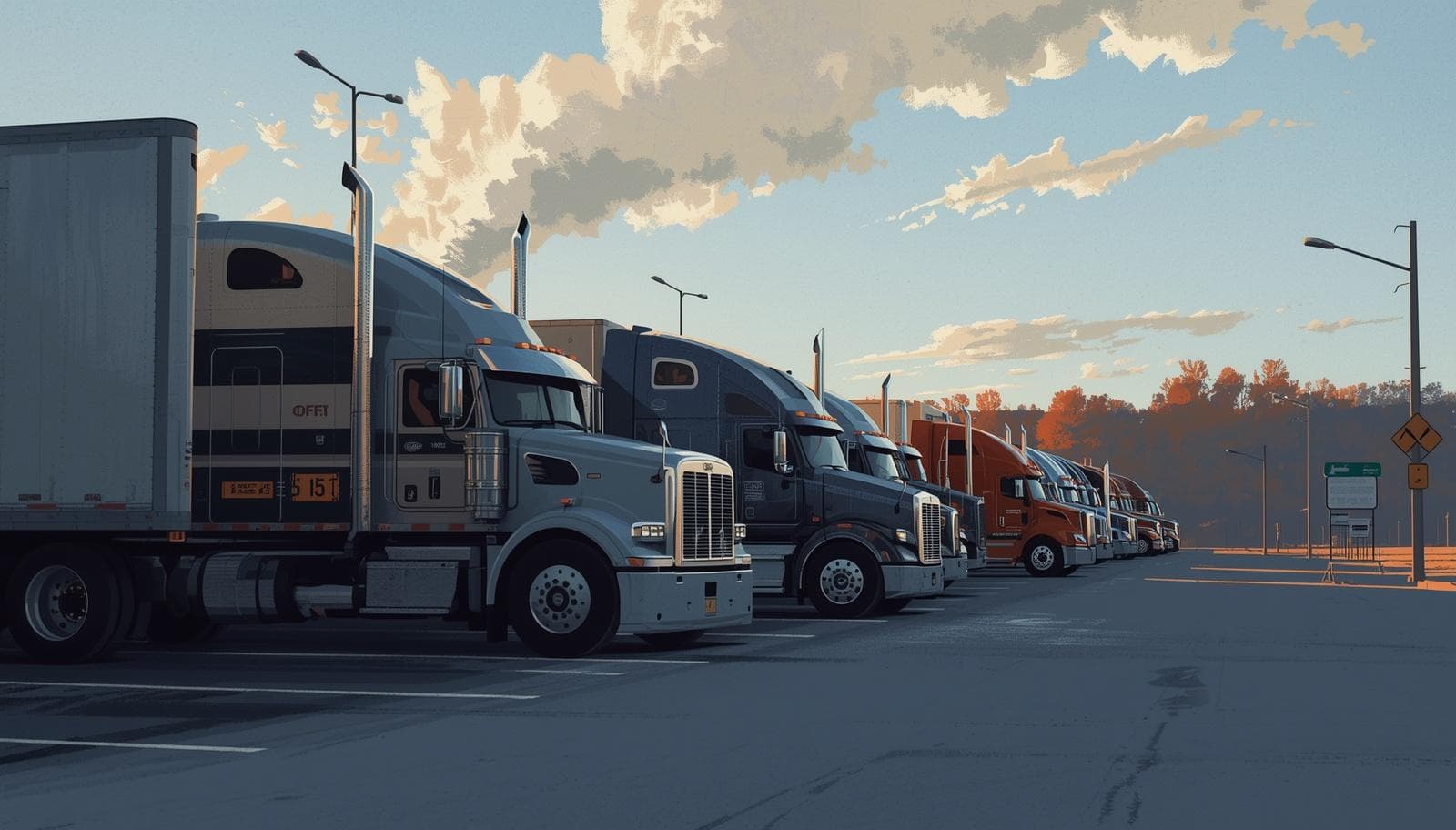
Volvo Trucks North America's D13 reveal isn't just an engine announcement. It's a compliance clock made visible. When a major OEM formally shows the drivetrain it's engineering to meet EPA 2027 NOx standards, the secondary market for pre-compliant iron starts moving — whether or not fleet operators are paying attention. In the Northeast, where emissions enforcement is aggressive, port and logistics volumes are high, and margins are already compressed by tariff-driven cost increases, the operators who recognize this window are already making calls.
This is a regulatory arbitrage moment. Not the kind that requires financial wizardry — the kind that requires reading the rules, doing the math on new versus used pricing, and moving before everyone else reaches the same conclusion.
What EPA 2027 Actually Changes
The 2027 heavy-duty emissions rule tightens NOx limits significantly beyond the 2010 standards. The engineering required to meet those targets — selective catalytic reduction upgrades, enhanced exhaust gas recirculation, tighter fuel injection tolerances — adds real cost to new truck production. OEMs have been developing to this standard for years, and the D13 reveal from VTNA is evidence that the compliant hardware is ready. Volvo's electric PTO launch alongside it signals something broader: the OEM strategy is bifurcating between near-term compliance and longer-term electrification, and both paths cost money that gets passed downstream.
For fleet operators, this means the price of new compliant iron in 2027 and beyond will reflect not just the compliance engineering but also the tariff environment. Steel, electronic components, and specialty emissions hardware are all subject to ongoing import costs that were still elevated heading into 2026. The new truck sticker price in 2027 is going to be a different number than what operators are used to budgeting against. Fleet purchasing managers at larger Northeast carriers have already begun adjusting their 5-year capital plans in response to projected new truck price increases.
The Used Market Window and Why It's Time-Limited
Experienced operators have seen this pattern before — most recently around Tier 4 Final off-road equipment rules and the 2010 on-highway diesel standards. Pre-compliance iron holds value, or gains value, in the 12 to 24 months before a mandate fully activates. Then it plateaus or softens as fleets turn over older equipment and the secondary market absorbs the volume.
Right now, the market hasn't fully priced the 2027 cliff into pre-compliant used trucks. Good spec used Class 8 trucks — Kenworth T680s, Peterbilt 579s, Freightliner Cascadias, Volvo VNLs built to pre-2027 emissions specs — are available at prices that still reflect a relatively normalized used market. That changes when two things happen simultaneously: new compliant trucks arrive at elevated prices, and fleet operators who delayed the decision rush the used market at the same time. Supply tightens, bidding gets competitive, and the operator who waited pays more for less-vetted equipment under time pressure.
The window is open. It is not permanently open.
Why the Northeast Fleet Position Is Particularly Acute
New Jersey, New York, Connecticut, and Pennsylvania are not neutral ground on emissions enforcement. These states run their own inspection programs, participate in multi-state air quality agreements, and have port authority operations — Newark, New York Harbor, Philadelphia — that impose additional operational emissions requirements beyond federal baseline. A fleet running drayage out of Port Newark or logistics out of a Meadowlands distribution center faces layered compliance pressure that operators in less-regulated regions simply don't.
That context makes the calculus on pre-2027 iron different here than in the Southeast or Mountain West. A Northeast drayage operator buying a compliant used truck today isn't just managing purchase price — they're managing regulatory exposure, inspection cycles, and potential port authority access requirements that could affect which equipment can work specific contracts by 2028 or 2029. Getting ahead of the compliance curve with good pre-2027 iron, maintained properly, extends operational flexibility. Waiting and buying under pressure narrows it.
Fleets that have relied on older equipment — trucks from the early-to-mid 2010s running well past their typical replacement cycle — face a harder choice. Hold aging iron with rising maintenance costs, or compete for pre-2027 used equipment against better-capitalized buyers who moved earlier. The mid-cycle used market for Class 8 has been tightening across the Northeast through the first half of 2026, with quality inventory moving faster than it was 18 months ago.
What Operators Who Have Survived Compliance Cliffs Before Actually Do
There's a specific mindset that separates operators who come out of regulatory transitions in good shape from those who get squeezed. It's not about being anti-compliance or gaming enforcement. It's about understanding that transitions create asymmetric information windows — and acting while the advantage exists.
Before Tier 4 Final hit off-road equipment, the operators who made money bought late-Tier 3 iron in good condition at pre-cliff prices, maintained it properly, and ran it through the full allowable operational life while competitors scrambled to finance new Tier 4 machines at elevated prices. Some of those late-Tier 3 excavators and loaders returned their purchase price in avoided financing cost alone over a 5-to-7-year hold.
The same structural logic applies here. A pre-2027 spec truck bought now at current market prices, maintained to fundamentals — oil changes on interval, fuel system kept clean and water-free, grease fittings hit on schedule — can realistically run 5 to 7 years of productive life in a Northeast fleet. That's 5 to 7 years of avoiding the compliance premium on new iron and the financing cost that comes with it. For a small to mid-size fleet owner running 10 to 30 units, the aggregate impact of that decision across the fleet is significant.
The operators who get this right are not the ones with the most capital. They're the ones with the clearest picture of where pricing is going and the discipline to act before the crowd arrives.
The Tariff Amplifier
The compliance cost story is already complicated. The tariff environment makes it more so. New truck production depends on components — electronics, specialty alloys, turbocharger assemblies, aftertreatment hardware — subject to import tariffs that were still elevated heading into 2026. OEMs don't absorb those costs. They pass them through. The sticker price on a 2027-compliant Class 8 truck will reflect both the compliance engineering investment and the ongoing tariff overhead.
Used equipment doesn't carry that overhead. The truck was already built. You're buying the operational asset at a price that reflects current secondary market conditions — not OEM manufacturing cost increases or trade policy volatility. In a tariff-elevated environment, that distinction matters more than it did three or four years ago. The spread between new and used heavy truck pricing has widened in 2026 compared to pre-tariff baselines, creating more favorable conditions for used equipment buyers than the market has seen in some time.
That spread won't hold indefinitely. As used values catch up to reflect the new truck premium — which they historically do during compliance transitions — the arbitrage compresses. The time to act is when the spread is wide, not after it closes.
What to Look For in Pre-2027 Iron
Timing matters. So does what you're buying. Quality pre-2027 used trucks are not the same as any pre-2027 used trucks, and the equipment that will hold up through a 5-to-7-year Northeast fleet run needs to be evaluated carefully before purchase.
For Class 8 on-highway equipment, start with the aftertreatment system on the existing engine — DPF condition, DEF system integrity, EGR cooler health. Deferred aftertreatment maintenance on pre-2027 trucks is the most common way sellers obscure problems. A truck with a compromised DPF or a cracked EGR cooler isn't a good buy at any price if you're planning a long hold. The repair cost hits immediately and wipes out whatever you saved on the purchase.
Frame integrity, fifth wheel condition, and air system health matter at any price point. But here's what most people miss: on pre-2027 iron being bought specifically for an extended hold, engine oil analysis history — if the seller has it — tells you more about the machine's real condition than the cosmetic state ever will. Operators who buy blind on appearance end up with surprises. Demand records, do compression checks, and run a full pre-purchase inspection on anything you're planning to run for the next half-decade.
Browse available commercial trucks and heavy equipment at toolpile.com/equipment to see what's currently moving in the Northeast and national secondary market.
The Forward Position
EPA 2027 is not a rumor or a distant policy discussion. The OEMs are building to it now. The compliant hardware is being revealed, which means production timelines are set. Fleet operators in the Northeast who are still treating this as a 2027 problem are already behind the operators treating it as a 2026 buying decision.
The used equipment market is one of the few places in a tariff-elevated, compliance-transition environment where business owners can still find genuine value. It requires more evaluation work than buying new, more discipline about what you're buying and why, and a clear-eyed view of operating costs over a realistic hold period. The operators who do that work now — before the compliance cliff price increases fully materialize and before competitive bidding on pre-2027 iron intensifies — are positioning themselves the way smart operators always have. Ahead of the crowd, with better equipment, at better prices.
The window is open. It will not stay open.
Frank has 13+ years in AML and financial crimes compliance. He built Tool Pile specifically to bring fraud prevention principles to contractor equipment marketplaces — anonymous listings, and scam detection baked in from day one.