
Construction Labor Shortage Creates Used Equipment Opportunities
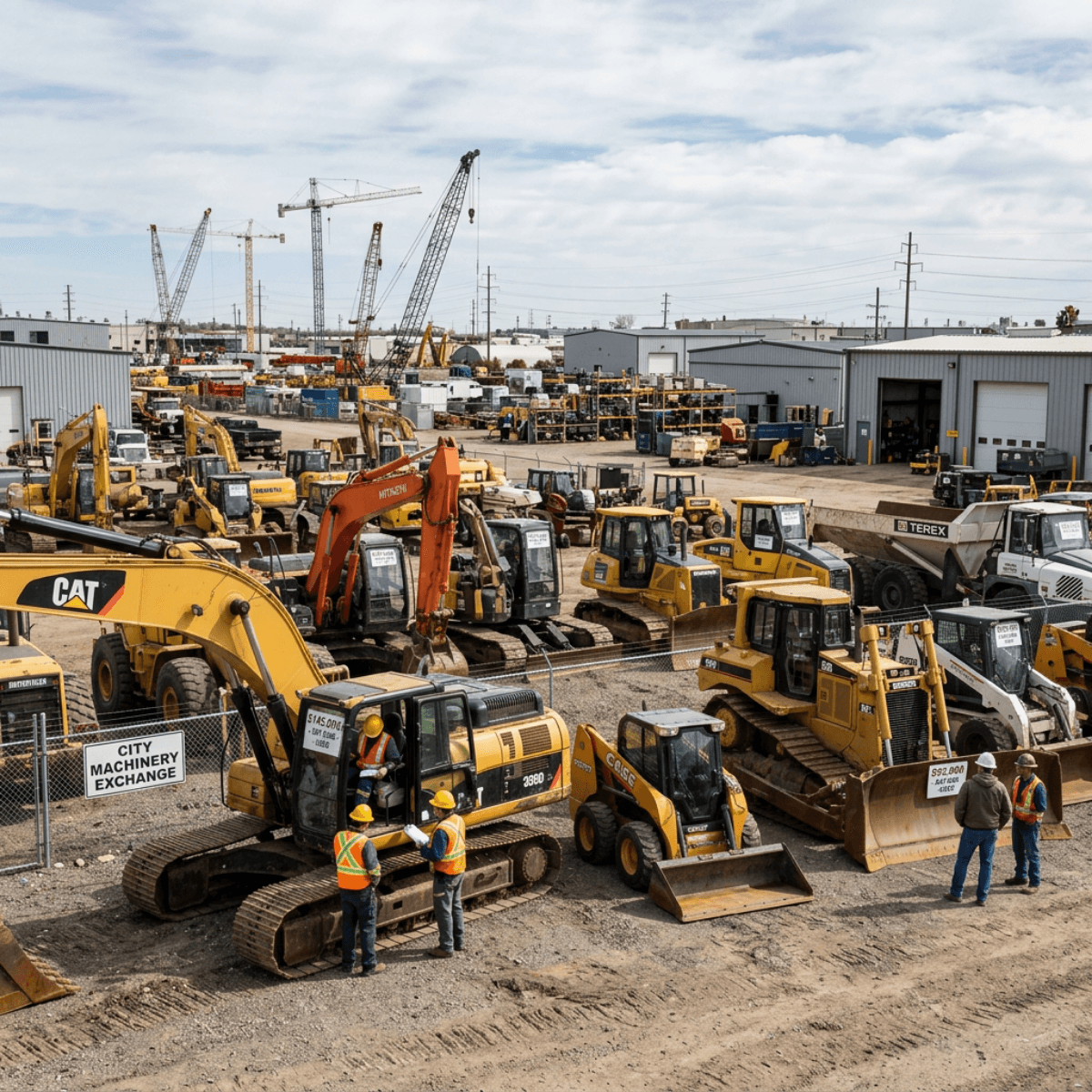
The construction industry's hiring crisis isn't just making it harder to find workers—it's fundamentally reshaping equipment buying decisions. When 69% of contractors report they can't find experienced candidates, the traditional labor-versus-equipment calculation flips completely.
Smart contractors are responding by investing in used equipment that multiplies worker productivity rather than competing for scarce labor. This shift is creating specific opportunities and price movements that savvy buyers can exploit.
How Labor Scarcity Changes Equipment Math
The numbers tell the story clearly. Hiring two additional laborers at $25 per hour costs $104,000 annually in wages alone—before benefits, training, or turnover costs. Meanwhile, a well-maintained used excavator can replace multiple workers on many tasks while requiring only one skilled operator.
This calculation explains why compact construction equipment prices have surged 15-20% since spring 2024. Mini excavators, skid steers, and compact track loaders—machines that extend one worker's capabilities—are moving faster than dealers can stock them.
But the market isn't rising uniformly. Larger equipment requiring specialized operators is seeing slower price growth. Road graders, large dozers, and specialized machinery like trenchers remain more affordable because contractors can't easily find operators for them.
Winners and Losers in Current Used Equipment Market
Hot Categories (Price Increases 10-20%):
- Mini excavators (7,000-15,000 lb class)
- Compact track loaders
- Skid steer loaders with attachments
- Small wheel loaders (under 3 cubic yards)
- Compact utility tractors with implements
Stable/Declining Categories:
- Large excavators (over 40,000 lbs)
- Motor graders
- Large dozers (D6 and up)
- Specialized paving equipment
- Cranes requiring certified operators
The Sweet Spot: 5-7 Year Old Machines
The best value right now sits in 2017-2019 model years. These machines offer modern reliability and fuel efficiency while avoiding the premium attached to near-new equipment. Specific models showing strong value:
Caterpillar 305.5E2 Mini Excavator: 2018-2019 models with 2,000-3,500 hours are trading for $35,000-$55,000, roughly $15,000 less than comparable Kubota or Takeuchi models.
Bobcat T770 Compact Track Loader: 2017-2018 units with maintenance records command $38,000-$45,000. High demand due to excellent attachment ecosystem.
John Deere 310L Backhoe: 2017-2019 models with 3,000-4,000 hours are available for $65,000-$75,000, offering versatility that replaces multiple specialized machines.
Case 570N XT Skid Steer: 2018-2019 units run $32,000-$38,000 and handle most attachments without hydraulic modifications.
Regional Market Intelligence for Northeast Buyers
Northeast markets show distinct patterns due to seasonal work cycles and union presence. New Jersey and Pennsylvania dealers report inventory turning over 40% faster than normal, particularly for snow-capable equipment this year.
Connecticut buyers benefit from proximity to dealer networks but face higher transport costs for equipment sourced from southern markets. Pennsylvania offers the best selection due to diverse construction activity, from highway work to residential development.
New York contractors are increasingly buying from Pennsylvania and New Jersey dealers to avoid state-specific emissions requirements on older equipment. This creates arbitrage opportunities for buyers willing to handle interstate transactions.
Seasonal Buying Windows
Northeast contractors typically buy equipment in two waves: late fall for snow equipment and early spring for construction season. The labor shortage has flattened this pattern somewhat, but timing still matters:
November-January: Best selection and prices for general construction equipment. Contractors liquidate underused machines before year-end.
February-March: Prices rise as contractors prepare for spring work. Limited selection by mid-March.
April-June: Premium pricing, limited availability. Emergency purchases only.
July-September: Steady market with occasional deals from contractors upgrading mid-season.
Finance and Cash Flow Considerations
Equipment financing has tightened, but used machinery under $100,000 still qualifies for competitive rates. Banks increasingly view productivity-enhancing equipment as good risk, especially when replacing multiple workers.
Lease options work particularly well for compact equipment with strong residual values. A 2019 Caterpillar 305.5E2 mini excavator leases for roughly $750 monthly over 60 months—less than half the cost of two additional laborers.
Cash buyers gain negotiating leverage, especially on machines sitting inventory for 90+ days. Dealers facing floor plan costs will often accept 10-15% below asking price for immediate cash sales.
Due Diligence in Hot Markets
Fast-moving markets create pressure to buy quickly, but basic due diligence remains essential. Focus on these critical areas:
Service Records: Demand complete maintenance history. Machines without records often indicate poor care or hidden problems.
Hour Verification: Cross-reference hourmeter readings with service records and general wear patterns. Tampered hourmeters are common on hot-selling equipment.
Hydraulic Systems: Check for leaks, smooth operation, and proper pressure. Hydraulic repairs can easily cost $8,000-$15,000 on compact excavators.
Undercarriage Condition: For tracked machines, evaluate track pad wear, sprocket condition, and roller wear. Budget $12,000-$18,000 for complete undercarriage replacement on mini excavators.
What's Coming Next
The labor shortage shows no signs of easing through 2026. Bureau of Labor Statistics projects construction employment growing 4% annually while new worker entry remains flat. This sustained imbalance will continue driving equipment investment over labor expansion.
Expect compact equipment prices to stabilize at current elevated levels rather than decline. New equipment delivery delays—still 6-12 months for popular models—will support used machine values.
Contractors who act now secure equipment at today's prices while avoiding spring premium pricing. Those waiting for market corrections may find themselves priced out of productivity gains entirely.
The construction labor shortage represents a permanent shift in how contractors must operate. Smart equipment buying isn't just about finding deals—it's about adapting business models to thrive with fewer workers and higher productivity demands.
Frank has 13+ years in AML and financial crimes compliance. He built Tool Pile specifically to bring fraud prevention principles to contractor equipment marketplaces — anonymous listings, and scam detection baked in from day one.